
$17.48
Add to Cart
15 SEEDS RARE CONOPHYTUM MINIMUM WITTEBERGENSE mesembs exotic succulent stones
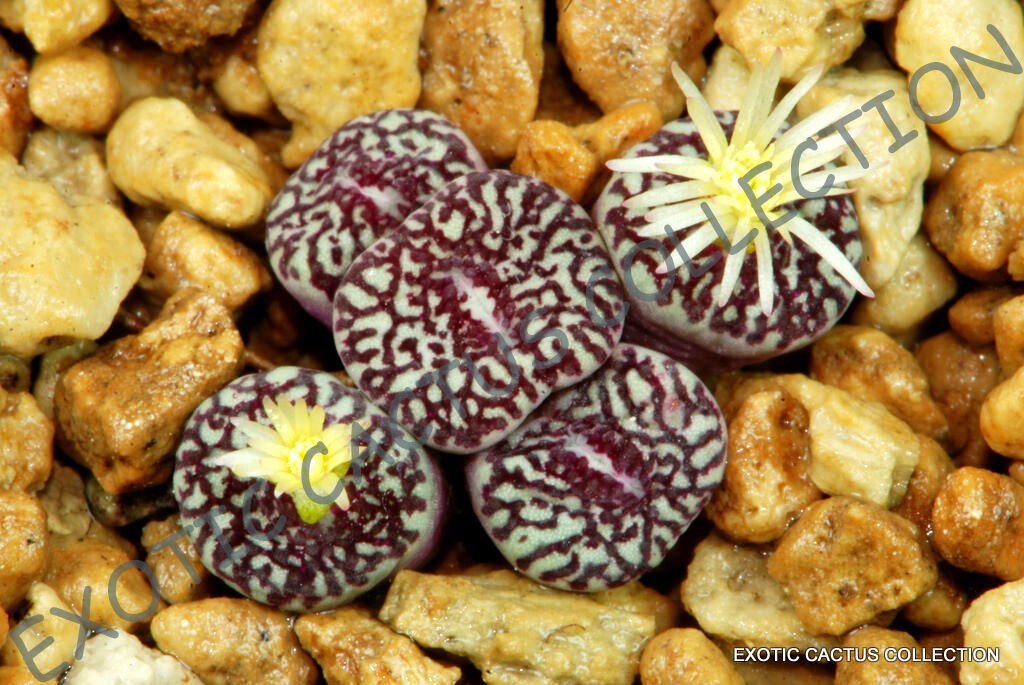
Conophytum is a genus of South African and Namibian succulent plants that belong to the Aizoaceae family. The name is derived from the Latin u201cconus” (cone) and Greek u201cphytum” (plant). The plants are also known as knopies (buttons), waterblasies (water blisters), sphaeroids, conos, cone plants, dumplings, or button plants. Conophytum species are dwarf cushion forming or single-bodied succulents.
Conophytums are tiny plants with succulent leaves ranging from 1/4" to 2" in length. These leaves are partially to entirely fused along their centers. Each leaf pair (together referred to as a body) ranges in shape from "bilobbed" to spherical to ovoid to tubular to conical. They may have "windows" on the top of their leaves. To the naked eye the epidermis ranges from very smooth to slightly rough to "hairy" depending on the microscopic epidermal cell shape and structure. They . In their normal, natural state each stem has only one pair of leaves at a time through one plant that may have dozens of stems and thus dozens of leaf pairs. When very heavy rains come to their native habitat they may grow luxuriantly and develop two leaf pairs per stem simultaneously, this is called "stacking up" of the leave.
Conophytums are tiny plants with succulent leaves ranging from 1/4" to 2" in length. These leaves are partially to entirely fused along their centers. Each leaf pair (together referred to as a body) ranges in shape from "bilobbed" to spherical to ovoid to tubular to conical. They may have "windows" on the top of their leaves. To the naked eye the epidermis ranges from very smooth to slightly rough to "hairy" depending on the microscopic epidermal cell shape and structure. They . In their normal, natural state each stem has only one pair of leaves at a time through one plant that may have dozens of stems and thus dozens of leaf pairs. When very heavy rains come to their native habitat they may grow luxuriantly and develop two leaf pairs per stem simultaneously, this is called "stacking up" of the leave.


