
$39.23
Add to Cart
Orange Daylily (1 Plant)


Can Not Ship To: NY
Exposure: Sun or Shade | Height At Maturity: Over 12 Inches | Planting Zones: 3-9 | Shipped As: Bare-root | Ships: 5-7 Days | Usage: Flower Gardens
We only ship bare root plants. They do not come in a container. Bare root plants need to be planted within 2-3 days of receiving unless weather-related problems prohibit planting. Store in a cool place and keep roots moist and covered with plastic until they can be planted. Water for the first week daily after planting.
Orange Day lily will Bring Beauty to Any Environment.
Orange Day Lily is a Vibrant Orange Blooming Perennial.
Orange Day lily is a native flower of Asia but has increased in North America; one of its names is the "Common Lily." Because they do so well in wet soil, you can plant daylilies in those areas that other flowers may not be suited for. Just because they are "common" doesn't mean you shouldn't plant a few in your flower garden. These are hardy little beauties and do well from zones three to nine. They take little care and fend for themselves. The flowers are orange and tend to be large, some as big as three and a half inches in diameter.
The daylily leaves are long and slender, somewhat like grass, and are from twenty-four to thirty-six inches high and droop about halfway up. This fact alone makes for a pretty addition to any flower garden. Daylily flowers are held on their stalks semi-erect without sagging downward.
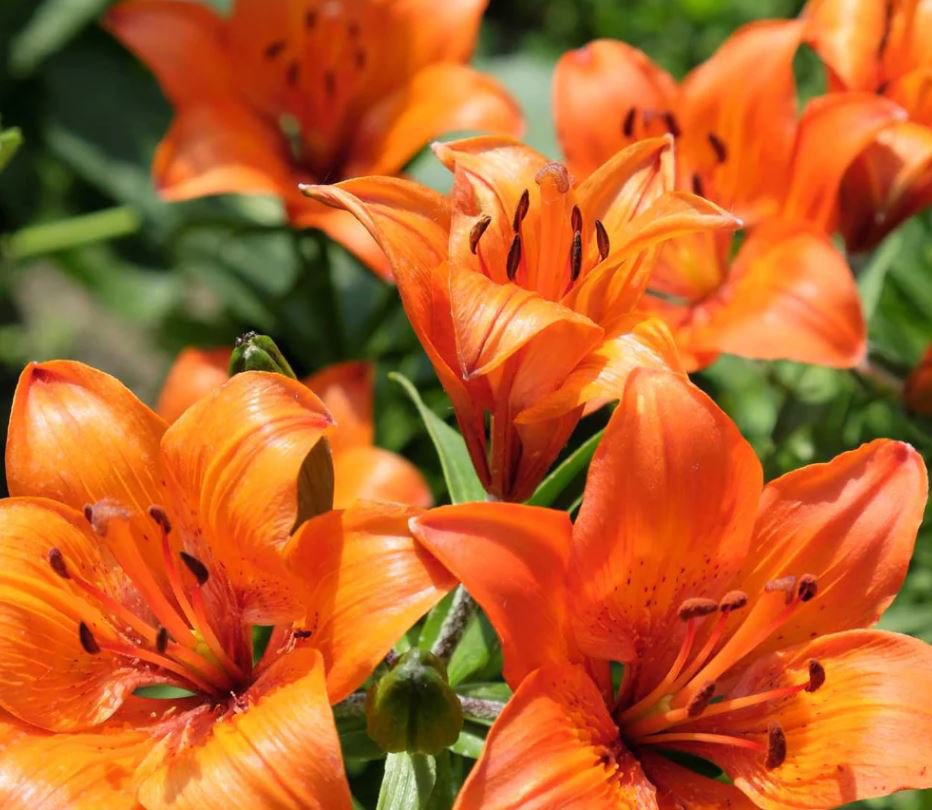
Each flower has three petals and three sepals that are very similar in look in a beautiful warm orange that rolls out and under at the tips. The flower's throat is yellow, around a bit of red. Because the fibrous root system forms clumps of leaves and flowers, they exclude other plants, so weeding is minimal.
Orange Daylily is Low Maintenance, Hardy Addition to your Landscaping and Flower Beds
The plant is a perennial that produces violently orange flowers, and emerald green leaves in the blooming season. It is clump-forming and can slowly spread on its own to fill areas and act as a semi-evergreen ground cover. It is particularly cold-hardy, though, in mild winters, it is likely to begin blooming somewhat early. The flower is an excellent plant in your landscape because of its bright, vibrant bloom that it can give you come spring to summer months.
Exposure: Sun or Shade | Height At Maturity: Over 12 Inches | Planting Zones: 3-9 | Shipped As: Bare-root | Ships: 5-7 Days | Usage: Flower Gardens
We only ship bare root plants. They do not come in a container. Bare root plants need to be planted within 2-3 days of receiving unless weather-related problems prohibit planting. Store in a cool place and keep roots moist and covered with plastic until they can be planted. Water for the first week daily after planting.
Orange Day lily will Bring Beauty to Any Environment.
Orange Day Lily is a Vibrant Orange Blooming Perennial.
Orange Day lily is a native flower of Asia but has increased in North America; one of its names is the "Common Lily." Because they do so well in wet soil, you can plant daylilies in those areas that other flowers may not be suited for. Just because they are "common" doesn't mean you shouldn't plant a few in your flower garden. These are hardy little beauties and do well from zones three to nine. They take little care and fend for themselves. The flowers are orange and tend to be large, some as big as three and a half inches in diameter.
The daylily leaves are long and slender, somewhat like grass, and are from twenty-four to thirty-six inches high and droop about halfway up. This fact alone makes for a pretty addition to any flower garden. Daylily flowers are held on their stalks semi-erect without sagging downward.
Each flower has three petals and three sepals that are very similar in look in a beautiful warm orange that rolls out and under at the tips. The flower's throat is yellow, around a bit of red. Because the fibrous root system forms clumps of leaves and flowers, they exclude other plants, so weeding is minimal.
Orange Daylily is Low Maintenance, Hardy Addition to your Landscaping and Flower Beds
The plant is a perennial that produces violently orange flowers, and emerald green leaves in the blooming season. It is clump-forming and can slowly spread on its own to fill areas and act as a semi-evergreen ground cover. It is particularly cold-hardy, though, in mild winters, it is likely to begin blooming somewhat early. The flower is an excellent plant in your landscape because of its bright, vibrant bloom that it can give you come spring to summer months.


